Tan Shuqin,works at museology and archaeology for twenty-five years, devoted herslf to the study of ancient stone carvings, stone reliefs, steles and epitaphs, and ancient Buddhist sculptures.
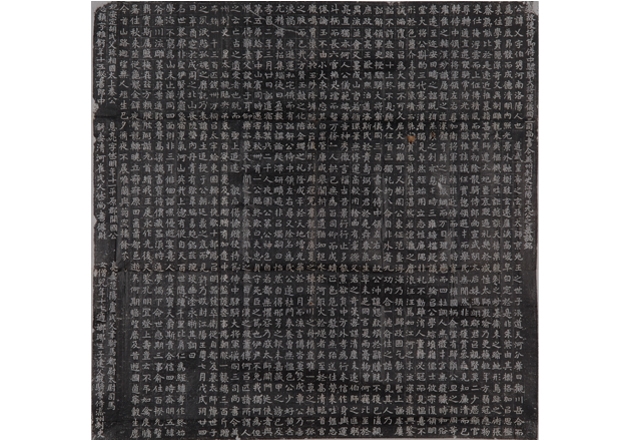
The epitaph stone is made of bluestone. It has a cover carved with lotus and double dragon patterns, but with no characters, and the four corners are damaged. The epitaph stone is square, and the epitaph includes 40 lines, each line containing 40 characters at maximum. The first line indicates that the epitaph is dedicated to Duke Yuan, who held several official positions such as the Envoy, Shizhong (Palace Attendant, a ministerial-level official), General of Chariots and Cavalry, Yitong sansi (Commander Unequalled in Honor), Shangshuling (Chief Imperial Secretary), Inspector of Jizhou, and Duke Jiangyang in the Northern Wei Dynasty. This epitaph stone has a cover (Fig. 1), and it was unearthed in 1935 from Qianhuanzi Village (present-day Xiangyang Village) in Luoyang. The cover and the epitaph stone were found in the same place but at different time. Now they are in the collection of Kaifeng Museum.
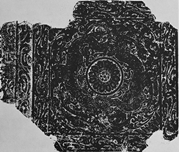
Fig. 1 Cover of the epitaph stone for Yuan Yi in the Northern Wei Dynasty
The epitaph records Yuan Yi’s family background and his life story. According to the text, Yuan Yi, also known as Bojun, was a native of Luoyang, Henan Province, the great-great-grandson of Emperor Daowu and Royal Highness of Yuan Ji who was Duke Jingzhao. He had held several positions, including General of Chariots and Cavalry, Yitong sansi (Commander Unequalled in Honor), Shangshuling (Prefect of the Masters of Writing), and Shizhong (Palace Attendant, a ministerial-level official). He was highly accomplished in traditional Chinese Han culture, as it is indicated in the epitaph that “he was interested in Huang-Lao thought when he was young and excelled in making annotations”, and he also studied Confucianism, Buddhism and Taoism. Yuan Yi died in a palace coup, as it is recorded in the epitaph: “On the 20th day of the 3rd lunar month in the 2nd year of Xiaochang period, a total of 2,000 soldiers besieged the mansion of Yuan Yi, who poisoned himself to death at the age of 41. The empress dowager mourned for him personally, and granted rich rewards including a suit of court dress, 300 catties of wax, 1,300 bolts of cloth and silk, and 400,000 coins. She also sent an envoy to supervise Yuan’s funeral, and allowed to offer Tailao sacrifice (including ox, sheep and pig, the funeral rite exclusively for a monarch ) to him. The posthumous name of Duke Jiangyang was honored to Yuan Yi. And on the 24th day of the 7th lunar month in the 2nd year of Xiaochang period, he was buried in the Changling Mausoleum on the Northern Mountains of Chengzhou (present-day Luoyang).”
The life stories of the tomb occupant Yuan Yi can be found in Biography of Duke Jingzhao in the Book of Wei. Yuan Yi, was known as Yi in written sources, styled Bojun, was also known by his nickname Yecha. His wife was the young sister of Empress Dowager Ling, and the relationship was attributed to his promotion to a high position, and his arrogance and imperiousness for his power controlling the state power. He had murdered Duke Qinghe Yuan Yi and Duke Zhongshan Yuan Xi, and even had put Empress Dowager Ling in captivity. As a result he was ordered to commit suicide by Empress Dowager Ling and Emperor Suzong. The biography records a little about his death, and lacks content about the specific time of his death, while the epitaph could provide a supplement.
The characters of the epitaph are regular and well-structured with a smooth and elegant brush strokes showing features in the late period of the Wei tablet style in the Northern Dynasties.
The Southern and Northern Dynasties saw a period when the Chinese nationalities were integrated and restructured. Emperor Xiaowen of the Northern Wei Dynasty reformed the social system and implemented the policy of sinicization, greatly easing the conflicts between different nationalities and promoting the development of epitaph. In 496, the 20th year of Taihe period, Emperor Xiaowen compelled his own Xianbei people to change the two-character surnames to one-character surnames of Han people. He said, “Northern people called earth Tuo and later Ba. The ancestor of Northern Wei was the Yellow Emperor, who highly valued earth and hence the surname Tuoba. The earth is yellow and the origin of all things. Therefore, it’s better to change Tuoba to Yuan”. Based on this, the family surname from Tuoba was changed to Yuan. The epitaph stone for Yuan Zhen, the earliest one of the kind dating from the Northern Wei Dynasty so far discovered in Luoyang, was carved in 496, the 20th year of Taihe period, and provides the best evidence for the reform. (Fig. 2)
The tablet style of Wei, a kind of script with features of official and regular scripts, was developed on the basis of the official script and became popular. This calligraphic style was resulted from the influence that the Central Plains culture had on Xianbei people, therefore, it shows remarkable vitality and primitive simplicity. Many members of the royal family surnamed Yuan began to study the Han calligraphy and some excelled in this. However, they seldom inscribed their names on the calligraphic works, and most were unknown. The epitaph for Yuan Yi was exquisitely made and brimming with literary grace, and boasts an elegant calligraphic style. The calligrapher’s name is unknown. But according to Yuan Yi’s status and the distinct treatment he received after death, the work must be contributed by a master artist following the meticulous arrangement of the government.
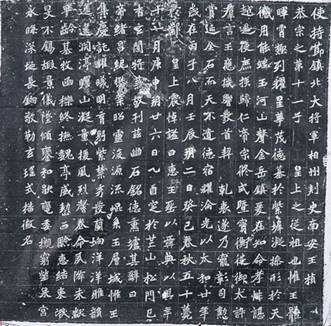
Fig. 2 Epitaph for Yuan Zhen in the Northern Wei Dynasty
As it appeared after the Tuoba ethnic minority adopted the policy of sinicization, the epitaph of Yuan family in the Northern Wei Dynasty features a unique style in calligraphy. With the continuation of the sinicization, epitaphs showed different styles in the early and late periods of Northern Wei.
Epitaphs for the royal family surnamed Yuan were dominant in the Northern Dynasties. With fine stone materials and exquisite carving, they embody the calligraphers’ stroke-using skills and carving techniques. The calligraphic style was close to the regular script, hence named Wei tablet style which has been regarded as a treasure of ancient calligraphic art through ages. The style mainly contains two categories: bold and elegant. During the Taihe and Jingming periods after the capital was moved to Luoyang, the Wei tablet style mainly featured angular strokes, compact structures, strict rules, and slightly adopted side-brush strokes with conservative cores and outreaching edges. On the whole, it looks bold, powerful, stable and vigorous, and is the mainstream style of Wei tablet. Epitaphs for Yuan Yu, Mu Liang, Yuan Song (Fig. 3), Yuan Si, Yuan Xiang (Fig. 4) and Yuan Xie of the Northern Wei Dynasty belong to this category, which is called “Mangshan style of Northern Wei Dynasty” by some scholars. Since the Zhengguang period in the Northern Wei Dynasty, due to the mutual permeation between southern and northern cultures, the elegant and graceful calligraphic style of the Southern Dynasties had a profound influence on the Northern Dynasties. The bold and angular strokes in the early period of the Northern Wei Dynasty were gradually changed to elegant and graceful ones; the characters were neat, and round strokes were adopted to produce a delicate and fine style. For example, epitaphs for Yuan Ni (Fig. 5), Yuan Huan, Yuan Zuan, Hu Zhaoyi (Fig.6) and Yuan Ti fall into this category. Moreover, some Wei tablets featured a simple and primitive calligraphic style, looked natural, and were not confined by general rules. For example, epitaphs for Yuan Jian and Xi Zhi (Fig. 7), though seemingly not following the rules and looking random in structures and strokes, were praised by Kang Youwei for changeable strokes, natural structures and lively interest.
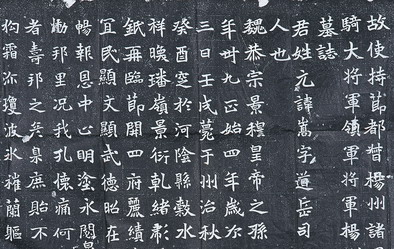
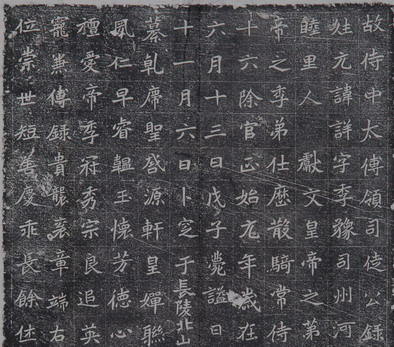
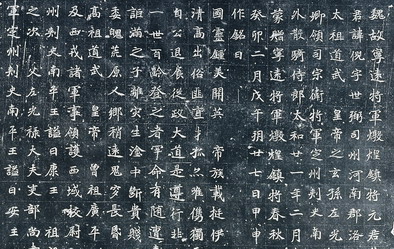
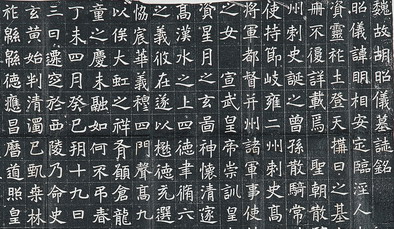
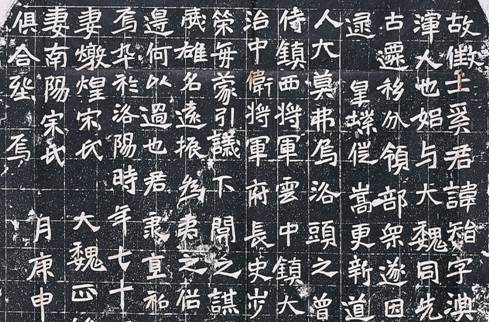
From the late Northern Wei Dynasty to Eastern Wei, Northern Qi and Sui Dynasty, the ancient calligraphic style was temporarily recovered and the official script became popular again. This phenomenon was clearly embodied in epitaphs during this period, for example, those for Dou Tai, Lou Heinv and Shi Xin (Fig. 8) of the Northern Qi Dynasty. It indicates that the regular script, during its transition, was unsteady, and its basic forms and rules were not complete. In the Tang Dynasty, the regular script reached its peak, and finally took shape and established the rules.
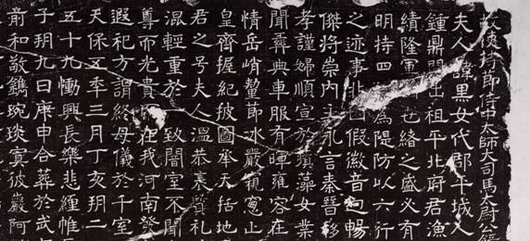
Compared with official documents and history, ancient epitaphs were recognized by the public as a platform to promote personal achievements. Because of some writers’ attitudes, some epitaphs laid great emphasis on wording and adopted some pompous expressions, which led to flashy texts without substance. This epitaph elaborates nothing about Yuan Yi’s immoral conducts. Instead, it excessively praises him and uses several allusions. For example, it states that Yuan Yi’s death had a great influence that was far beyond the results from Baili Xi’s death in the Qin Dynasty and Xiao Fu’s death in the Han Dynasty. Here two historical stories are mentioned. Can you tell these two stories?
Your answer please, if you have any questions or answer, please feel free to send us email, we are waiting for your answers and participation, and your comments, answers and suggestions will be highly appreciated. We will select and publicize the most appropriate answers and comments some time in the future.
Weekly Selection Email: meizhouyipin@chnmus.net
Epitaphs in Henan were mainly unearthed in Luoyang. Beimang Hill, a range of Xiaoshan Mountain, is located in the north suburb of Luoyang and on the southern bank of the Yellow River. It extends over 190km from east to west and has an altitude of 273 meters. Enjoying an advantageous location adjacent to the Yellow River in the north and facing Yique (present-day Luoyang) in the south, this region had been chosen as the graveyard to bury emperors, generals and celebrities since ancient times. Since the late Qing Dynasty, up to 6,000 epitaphs of previous ages have been unearthed. Among them, nearly 400 date from the Northern Wei Dynasty, ranking 1st in the country.
In 1924, Mr. Yu Youren, a celebrity during the Republic of China, bought about 300 pieces of stone carvings found in Beimang Hill, and named the storage Studio of Seven Couples. In 1937, he donated all of these tablets, most of which had been well preserved, to the Forest of Stone Steles Museum in Shaanxi. In his book Records of Time and Places of Stone Tablets in Luoyang, Guo Tutang, a businessman dealing with tablets, recorded the specific place where these stone carvings of the Northern Dynasties were unearthed in Beimang Hill. According to statistics on rubbings from epitaphs of Southern and Northern Dynasties produced by Zhao Wanli in his book Annotations on Epitaphs of Han, Wei, Southern and Northern Dynasties, by far there have been about 400 pieces of epitaphs dating from Southern and Northern Dynasties in private/public collections. Except for those in private collections or those illicitly exported to foreign countries, there are only a few pieces of epitaphs preserved in Chinese mainland and they are mainly collected in the National Museum of China, Forest of Stone Steles Museum in Xi’an, Qiantangzhizhai Stone Carvings Museum in Xin’an of Luoyang, Luoyang Ancient Art Museum, Kaifeng Museum, Henan Museum, Liaoning Provincial Museum and some other museums or cultural heritage institutions. After the founding of the People’s Republic of China, a few pieces of epitaphs have been unearthed in Mangshan Hill of Luoyang.