
In May 1985, a farmer from Tangzhuang village of Dengfeng stumbled across a gold slip engraved with characters at Junji Peak of Mount Taishi of Mount Songshan. He submitted it to Dengfeng People’s Government that delivered it to Henan Museum later. The inscription reads: “Wu Zetian, monarch of the Great Zhou Dynasty, favors Taoism, hence casts a gold slip to pray to Deities at Mount Songshan for eliminating disasters and living a long life on the seventh day of the seventh lunar month (700 CE), commissioned to my attendant Hu Chao.” The slip is the only movable artifact left by Wu Zetian personally and related to her, and is of great significance for studies of the Tang history, the political thoughts and calligraphy of Wu Zetian, ancient system of Toulongjian (sin-exempting incantation casting ceremony), ancient ceremony of Fengshan (the imperial sacrifice to Heaven and earth on sacred mountains), etc.
The inscription on the gold slip of Wu Zetian conveys lots of cultural and historical information. It mainly indicates that the slip is devoted to Taoist Deities at Mount Songshan(one of China's five sacred Taoist peaks) to praying for absolution from her sins. The “Three Deities and Nine Palaces” mentioned here refer to Taoist Deities of Heaven, Earth and Water as well as their abodes. According to Rites of the Audience in the Book of Etiquette and Ceremonial, “silk and sacrifices shall be burned for worshipping Heaven, worshippers shall climb high to offer sacrifices to mountains, sacrifices shall be sunk into water to worship rivers, and be buried to worship the Earth”. After Taoism was founded, Deities of Heaven, Earth and Water were defined as Three Deities to cure diseases and ward off evil spirits, and each of them has three abodes, totaling nine.
The inscription reveals that the slip is cast by Wu Zetian, and is an icon devoted to the “Three Deities and Nine Palaces” to pray for eliminating disasters and living a long life. The event is an important part of the Taoist ceremony. In ancient times, when emperors organized Taoist sacrificial ceremonies, they usually engraved their prayers on three slips to communicate with the Three Deities in the divine world and pray for blessings and eliminating disasters. This is named as Toulongjian.
The inscription on the gold slip indicates that Wu Zetian believed in Taoism. Before ascending the throne, she believed in Buddhism, and used to make public opinions for her enthronement by counterfeiting the Mahamegha Sutra and the Annotations to Mahamegha Sutra via the Taoist incantations. After her enthronement, she gradually turned to Taoism and organized many Toulongjian ceremonies. According to the records on the Stele of Daiyue Taoist Temple dating from 691, the 2nd year of Tianshou period, “on the tenth day of the second lunar month, Ma Yuanzhen, head of Jintai Taoist Temple at Mount Songshan, cast slips to worship Deities of sacred mountains and rivers by imperial order of Great Zhou Dynasty.” The Stele of Taishang Laojun in Fengxian Taoist Temple also bears an inscription saying that Ma Yuanzhen, head of Jintai Taoist Temple, cast slips to worship Deities of sacred mountains and rivers by imperial order in the 3rd year of Tianshou period.
After that, people were sent to cast such slips respectively in 698, the first year of Shengli period, 701, the first year of Chang’an period, and the ninth and 11th lunar months in 704, the fourth year of Chang’an period. In 699, the second year of Shengli period when Wu Zetian passed by Goushi, she personally composed an article and inscribed characters meaning “Stele of Shengxian Taizi” on a stele in the Temple of Shengxian Taizi, showing her respect to Taoism and longing for becoming an immortal.
At the end of the inscription on the gold slip is the date when it was cast: the seventh day of the seventh lunar month in the year of Taisui Gengzi, according to the dating method of Taisui or Suixing in ancient China. Besides it, there were two more dating methods: the reign title dating and the Heavenly Stems and Earthly Branches dating. The latter started in the Eastern Han Dynasty, and has still been used in the lunar calendar today. In ancient times, the reign title dating method was mainly used on bamboo slips, and the Taisui dating method prevailed in the Tang Dynasty. Besides the gold slip of Wu Zetian, there were other cases adopting such dating method: the bronze slip of Emperor Xuanzong of Tang, the silver slip cast by Qian Liu of the Wuyue Kingdom during the Five Dynasties at the age of 65. In addition, Qian Liu cast another slip at the age of 77, which mixed the reign title and Taisui dating methods. Such combination is also found on the jade slip of Emperor Shenzong of the Song Dynasty discovered in Jidu Temple.
Among the inscription on the gold slip, there are five characters invented by Wu Zetian: “圀” (Guo), “瞾” (Zhao), “日” (Ri), “月” (Yue) and “臣” (Chen). After she ascended the throne, she invented a total of 19 characters to manifest her uniqueness and political intention as well as her ruling thoughts.
Mount Songshan, where the gold slip of Wu Zetian was discovered, is the Central Sacred Mountain among the five ones and occupies an important position in Chinese history. According to historical records, Qin Shi Huang was the earliest emperor to hold Fengshan ceremony, and such ceremony was mostly held at Mount Tai. Only Emperor Wu of Han and Wu Zetian visited Mount Songshan, with the latter being the only one to conduct Fengshan ceremony there.
In 690, Wu Zetian founded the Zhou Dynasty replacing the Tang Dynasty, made Luoyang the capital, and changed the reign title to Tianshou. In the second year of Tianshou period and the first year of Zhengsheng period, influential ministers submitted two memorials to Wu Zetian respectively appealing for the Fengshan ceremony at the Central Sacred Mountain, in a bid to lay the foundation for her official worship of heaven and earth. In 696, the second year of Tiancewansui period, Wu Zetian held the Fengshan ceremony in Mount Songshan. She conducted the sacrifice-burning ritual in the south of Mount Songshan and then held a ceremony at the sacrificial altar and buried the jade slips in the mountain. Three days later she completed the Fengshan ceremony on Mount Shaoshi, after which she honored Mount Songshan, the Central Sacred Mountain, as the Divine Mountain, and the deity of the mountain as Sovereign of the Divine Mountain in the Center of Heaven, elevating Mount Songshan to an unprecedented high status. Moreover, she made clear the orthodox status of her Zhou Dynasty through this way. After the ceremony, Songyang County was renamed Dengfeng, and Yangcheng County, Gaocheng, meaning “great success”, and the reign title was changes to Waisuidengfeng. From then on, she had visited Mount Songshan many times to pray for peace and elaborate on her political ideal. In the second lunar month of 699, the second year of Shengli period three years after the Fengshan ceremony, Wu Zetian came to Mount Songshan again to pay homage to the Temple of Shengxian Taizi where Crown Prince Jin of King Ling of Zhou became an immortal riding a crane. She was also inspired to compose a text on the Stele of Shengxian Taizi (Fig. 1), inscribed the stele top in Feibai script, and erected the stele in the Temple. In the summer of 700, the first year of Jiushi period, Wu Zetian visited Shicong River in Gaocheng County. And at the time, she had Hu Chao cast the gold slip at Junji Peak.
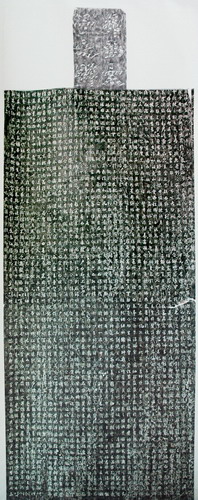
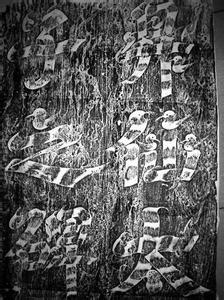
Fig. 1 Rubbings from the Stele of Shengxian Taizi and the stele top
Bamboo(wooden) Slip, a kind of material used by ancient people for recording, was popular in the Warring States Period, Qin and Han Dynasties. Later with the invention of paper, the slip gradually lost its original function. With the rising of Taoism in the Eastern Han Dynasty, the function of slip was changed and it was often used in Taoist events. According to differences in function, slip was also called Zha, Ban, Ye, Ci, Quan in Chinese. There were mainly four functions. Firstly, the periapt to ward off evil spirits or cure diseases; secondly, visiting card devoted to Earth Deity; thirdly, a human-shaped slip for the exercise of eliminating disasters; fourthly, the land purchase certificate in the tomb chamber. The Gold Slip of Wu Zetian is the only one made of gold so far discovered in China. According to the records in Annals of Kuaiji in Jiatai Period, “Yuan Zhen, a governor of the Tang Dynasty, cast a gold slip in Yangming Cave on Spring Equinox”. It indicates that there used to other gold slips in history.
The gold slip of Wu Zetian falls into the category of Toulongjian in ancient times, and several slips of the kind have been discovered in China by far. The bronze slip (Fig. 2) cast to the Southern Sacred Mountain by Li Longji, or Emperor Xuanzong of Tang, which was discovered during Emperor Daoguang’s reign in the Qing Dynasty, is now in the collection of Guizhou Provincial Museum. It measures 35.9cm long, 12cm wide and is plain all over the body. The front side is engraved with 86 characters, and the back side with 51. With its length roughly approximate that of the gold slip of Wu Zetian, it is slightly wider. Though both plain, this one has characters engraved on both front and back sides. It also adopted the Taisui dating method, and was cast by a Taoist. The inscription is of the same pattern with that on the gold slip of Wu Zetian: beginning with the title of the emperor, followed by his/her favor with Taoism, indicating what he/she prayed for, the one who cast the slip and the date.
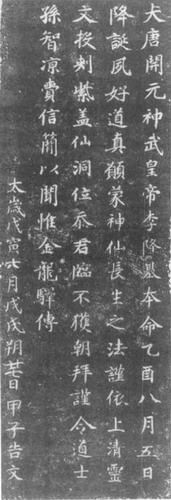
Fig. 2 Bronze slip of Emperor Xuanzong of Tang (rubbing), in the collection of Guizhou Provincial Museum
During the Five Dynasties and Ten Kingdoms Period, Qian Liu, Qian Yuanguan, Qian Hongzuo and Qian Hongchu from the Wuyue Kingdom cast slips to the West Lake, and a total of ten have been discovered so far. At that time, the shape of the slip began to be diversified.
In 913, Qian Liu, at the age of 62, cast a silver slip (Fig. 3) to Shifanli of Wuyun Township, Kuaiji County, Yuezhou. It measures 37.2cm long and 8.72cm wide, is plain and arch-shaped on both ends, with over 300 characters carved on it.
In 928, Qian Liu, at the age of 77, used to present slips to all prestigious mountains and temples. By far, three of them have been discovered, with different shapes and sizes.
The first one was cast to Gaoli, Dongting Township, Wuxian County, Suzhou Prefecture (Fig. 4). Found in Emperor Shunzhi’s reign of the Qing Dynasty, it measures 20cm long and 13.1cm wide, and is engraved with wave pattern in the lower part and dragon-in-clouds pattern on both sides and in the upper part. Within the frame, there are 279 characters. The second one was a jade slip cast to Wangliangli, Dongting Township, Wuxian County, Suzhou Prefecture of Wuyue Kingdom (Fig. 5). Its length-to-width ratio is similar to that of the above-mentioned silver slip, and the patterns are the same. On both its front and back sides there are 188 characters. The third one was cast to a certain prefecture/county/town of Wuyue Kingdom (Fig. 6). Measuring 31cm long and 6.7cm wide, it is plain but is engraved with 194 characters. The name of the prefecture/county/town remains blank, and it is possible that the name would be engraved on the slip when the specific location is decided. Among these three slips, the former two are similar in shape and pattern, and the latter one is distinctively different from them. Instead, it is similar to the one cast by Qian Liu at the age of 62.
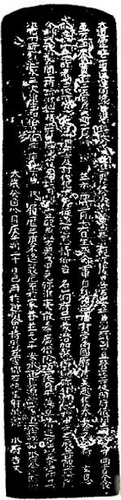
Fig. 4 Silver slip cast by Qian Liu at the age of 62
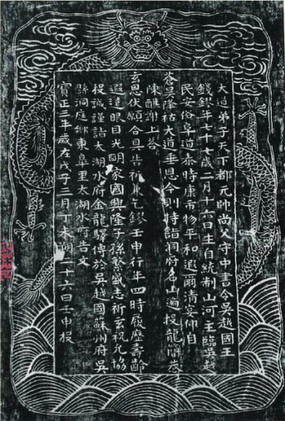
Fig. 4 Silver slip cast to Gaoli, Dongting Township, Wuxian County, Suzhou Prefecture, by Qian Liu at the age of 77 (rubbing)
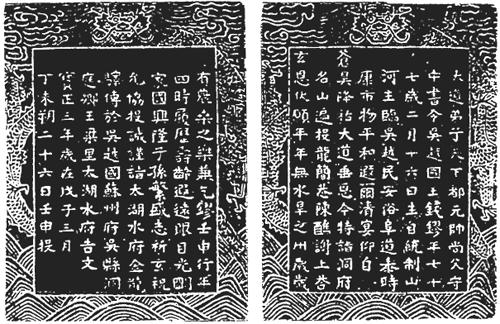
Fig. 5 Jade slip cast by Qian Liu at the age of 77 (rubbing)
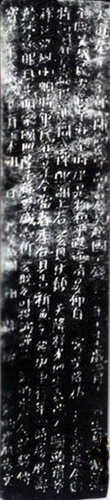
Fig. 6 Silver slip cast by Qian Liu at the age of 77
The silver slips of Qian Hongchu (Fig. 7 and 8), cast at the age of 21 and 23 respectively, are both plain and measure about 33cm in length and 14cm in width. The Song Dynasty saw a larger number of jade slips cast by the emperors, for example, the jade slip (Fig. 9) dating back to 1105, the fourth year of Chongning period during Emperor Huizong’s reign, and in the collection of the National Museum of Chinese History, and another one cast to Jishui River in 1068, the first year of Xining period during Emperor Shenzong’s reign in the Northern Song Dynasty, and in the collection of Jiyuan Museum, both rectangular and plain.
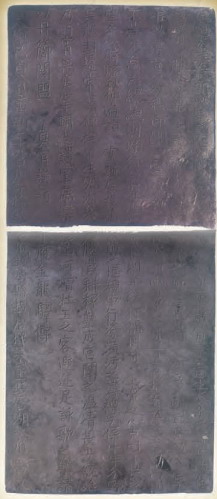
Fig. 7 Silver slip cast by Qian Hongchu at the age of 21, in the collection of Zhejiang Provincial Museum
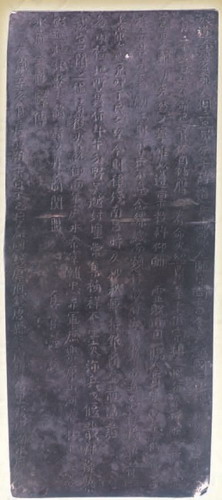
Fig. 8 Silver slip cast by Qian Hongchu at the age of 23, in the collection of Zhejiang Provincial Museum
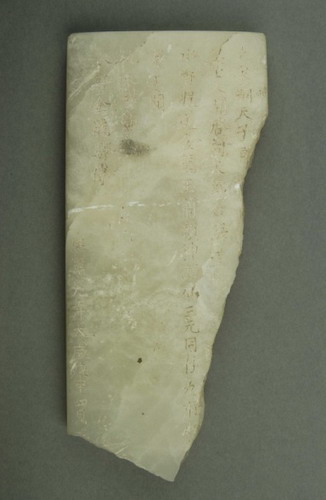
Fig. 9 Jade slip cast to Jishui River in the first year of Xining period during Emperor Shenzong’s reign in the Northern Song Dynasty, in the collection of Jiyuan Museum
The comparison between the Tang and Northern Song slips mentioned above reveals that Toulongjian can be divided into two kinds basically. The first is rectangular one, about 35-1cm in length, 6.7-14cm in width, plain. The case in point is the gold slip of Wu Zetian. There are 63, 137, and over 300 characters respectively engraved on the gold slip of Wu Zetian, on the slip of Emperor Xuanzong of Tang, and on the slip cast by Qian Liu at the age of 62. From the Tang to Song Dynasties, characters on the slips gradually increased. In addition, the inscription on the gold slip of Wu Zetian indicates specific location and target of the slip, while the slip cast by Qian Liu at the age of 77 indicates no specific location, with many slips cast to several places at the same time. Secondly, two nearly square slips with patterns cast by Qian Liu at the age of 77. Such slips are special, and their wave and dragon patterns haven’t been found on other slips and need further research.
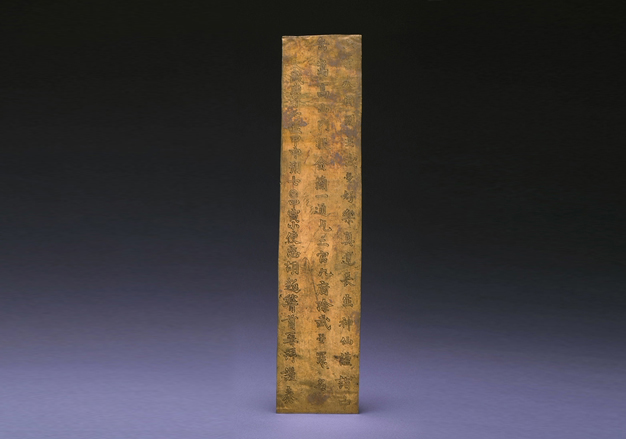
The gold slip of Wu Zetian is 36.20cm in length, 8cm in width, and 223.5g in weight, containing more than 96% gold. It is plain on the whole, and is engraved with 63 characters in three lines. Discovered at Junji Peak of Mount Songshan, it is now in the collection of Henan Museum.