
Zhao Le: a museologist of the Collections Administration Department of Henan Museum, dedicated to collections design and research.

Dong Yuange, graduated from the Secretary Dept, Henan Institute of Finance and Economics, with a BA's degree. Holding an academic title of Museologist, she is dedicated to administration of books and journals, study on museology as well.
In the early 1950’s, the Cultural Center of the Fangcheng County of Henan Province collected a guqin with crackles similar to those on a snake’s belly (the seven-stringed guqin with the inscription of “Shiquan”) in the Shizhai Village eight kilometers northwest to the Zhaohe River 17 kilometers west to the county seat. At the time of collection, the guqin was covered with crackles with the strings missing. It used to be entirely painted with black lacquer, but a large area of the lacquer peeled off and the wood body exposed, lusterless.
Surface: The guqin’s surface measures 121 centimeters long and 19 centimeters wide. It is made of soft tung wood, for better vibration. Some of the seven strings are missing. Eleven hui marks (pitch positions) remain.

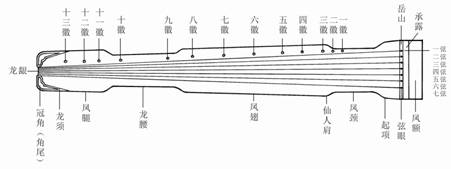
Fig.1 Surface of the seven-stringed guqin with the inscription of “Shiquan” and its line drawing
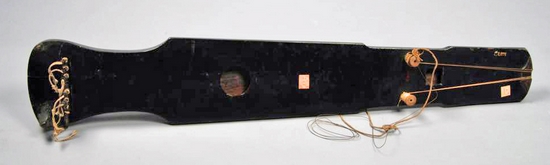
Bottom (Fig.2): The guqin’s bottom measures 121 centimeters long and 19 centimeters wide. In the upper middle of the bottom there is a rectangular opening, known as longchi, literally “dragon pool”. The rectangular opening roughly in the middle of longyao or “dragon’s waist” at the guqin’s tail is called fengzhao or “phoenix pond”. The bottom board is made of brittle wood for good reverberation.

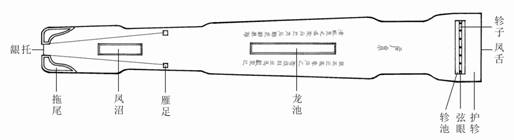
Fig.2 Bottom of the seven-stringed guqin with the inscription of “Shiquan” and its line drawing
The right wall inside longchi part is inscribed with four regular characters reading “the second year of the Longxing era” (Fig.3). Longxing was the reign title of Emperor Xiaozong of the Southern Song Dynasty. The emperor was born Zhao Shen.
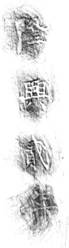
Fig.3 Rubbing of the inscription on the larger slot belly of the seven-stringed guqin with the inscription of “Shiquan”
Slot belly: There are two hidden slots at the guqin’s head part, commonly known as shexue and shengchi (literally “sound pool”). The hidden slot at the tail part is called yuncao (literally “tone pond”). There is a protruding nayin block on the surface at the place corresponding to longchi and fengzhao respectively, so that sound would reverberate inside the slot belly and come out. The two square holes on the bottom board at the longyao part are called zuchi, literally “feet pool”, to fix yanzu or “goose feet”. The sound could also come out from these two holes. (Fig.4)
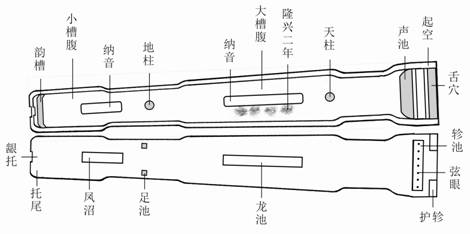
Fig.4 Profile of the slot belly of the seven-stringed guqin with the inscription of “Shiquan”
Yanzu and qinzhen: At the places on the bottom board corresponding to those between No.9 and No.10 hui marks on the surface there are two square holes to hold yanzu. These two yanzu studs (now missing) are used to support the guqin’s body and fasten the strings. The seven qinzhen pegs in zhenchi or “peg pool” serve as the other terminal for the seven strings and are well secured in the seven string holes. (Fig.5)
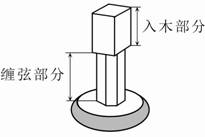
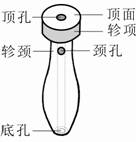
Fig.5 Line drawings of yanzu and qinzhen pegs of the seven-stringed guqin with the inscription of “Shiquan”
Yueshan, chenglu, string holes, huzhen and fengshe (Fig.6): The yueshan part (bridge) measures 13.5 centimeters long and 3.3 centimeters high. The chenglu part is made of hardwood. The seven small holes on the bottom of yueshan are known as string holes, to secure the pegs. Huzhen, or “peg protector”, protects pegs from being struck and serves as decoration to the guqin. Fengshe or “phoenix tongue” is mainly a decoration part.
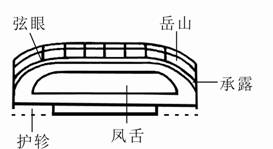
Fig.6 Illustration of the yueshan, chenglu, string holes, huzhen and fengshe parts of the seven-stringed guqin with the inscription of “Shiquan”
Longyin, guanjiao and yintuo: Longyin or “dragon’s gums” is used to support the strings. The curved wood blocks on both sides of longyin are called guanjiao (“ceremonial cap”) and well fit the curve of the surface. Guanjiao blocks are merely ornament parts. Yintuo block (“gum supporter”) on the bottom at the tail part is made of hardwood and glued underneath guanjiao and longyin in a way parallel to them. Yintuo block is also a support to the strings and prevents them from coming into contact with the bottom board, so that the anti-reverberation of the bottom board wouldn’t be diminished. (Fig.7)
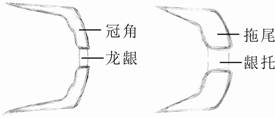
Fig.7 Rubbing of the guanjiao, longyin, tuowei and yintuo parts
Hui marks and strings: The hui marks on the guqin with the inscription of “Shiquan” are terribly worn, with 11 well recognizable. There are usually 13 hui marks to indicate musical notes on the surface of a guqin. A string conventionally consists of a certain number of silk threads. Tightly twisted, the silk strings would then be soaked in a vat of glue, in case they fall apart later.
At the narrow-waist part near the head there are two seal characters of “Shiquan” inscribed on the bottom board. Also on the bottom board there are two lines of official characters, indicating that the guqin made with lacquer-filling technique features extremely good material and sound. (Fig.8)
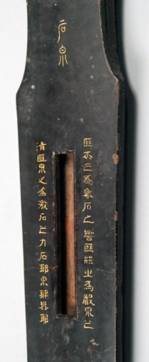
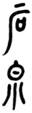
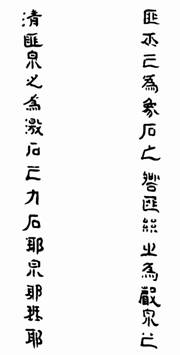
Fig.8 Photo and facsimile of the inscriptions on the bottom board of the seven-stringed guqin with the inscription of “Shiquan”
26 styles of guqin (Fig.20)
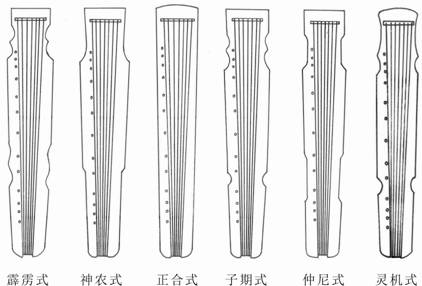
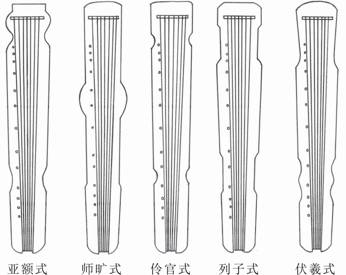
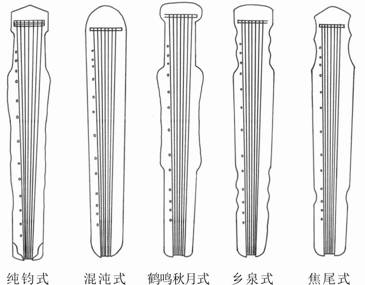
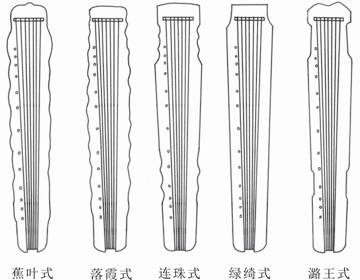
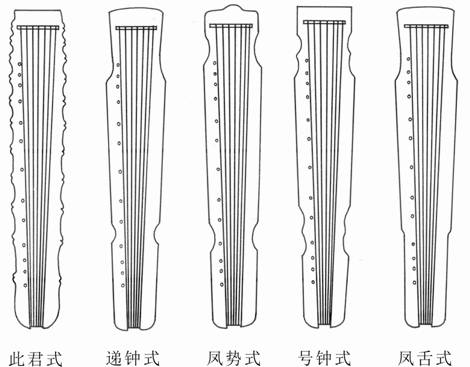
Fig.20 Guqin styles
Guqin was included on May 20, 2006 by the State Council into the first list of the national intangible cultural heritage under the category of “folk music”. Guqin has been so far the only Chinese solo musical instrument inscribed by the United Nations on the Masterpieces of the Oral and Intangible Heritage of Humanity. A large number of guqin music pieces have been passed down. There are over 3,000 pieces of music scores exclusively for guqin performance of more than 600 types. Guqin thus enjoys the largest number of music pieces among all the musical instruments around the globe. Hundreds of guqin made in the Tang, Song, Yuan, Ming and Qing dynasties have survived today. Some made in the Tang Dynasty can still be played nowadays. Guqin is like a living fossil of the ancient Chinese music art and a piece of true-to-the-name intangible heritage, as the traditional Chinese guqin art has kept passed down and developing all through the history, with newly-created or revised music works emerging in the past centuries [19].
1. As is known to all, Confucius in the Spring and Autumn Period acquired superb skills in playing guqin and authored many pieces of guqin music. Could you please name at least four pieces of guqin music played by Confucius, as recorded in written documents?
2. Chinese guqin has been known for the elegant shape, delicate craftsmanship, clear and beautiful sound. Could you please name the two dynastic periods that saw the golden age of guqin making?
Your answer please, if you have any questions or answer, please feel free to send us email, we are waiting for your answers and participation, and your comments, answers and suggestions will be highly appreciated. We will select and publicize the most appropriate answers and comments some time in the future.
Weekly Selection Email: meizhouyipin@chnmus.net
The 10-stringed guqin unearthed in 1978 from the tomb of Marquis Yi of Zeng at Dongtuanpo, Leigudun two kilometers west of Suizhou, Hubei Province, was the earliest material object of guqin ever discovered. Made in the early Warring States Period, it measures 67 centimeters in overall length. Entirely coated with black lacquer, the guqin was with a good gloss when it was unearthed. (Fig.10)
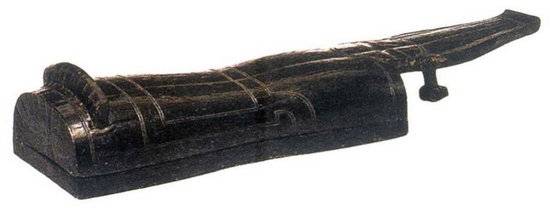
The seven-stringed guqin unearthed in 1993 from No.1 Tomb in the Guodian Village, Jingmen, Hubei Province, was made during the Warring States Period. The piece is 82.1 centimeters in overall length. The surface is 50.8 centimeters long, with the body and tail of the same width of 12.4 centimeters. It was the earliest material object of a seven-stringed guqin that has been discovered so far. (Fig.11)
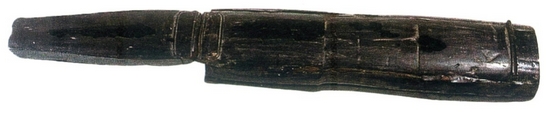
The seven-stringed guqin unearthed in 1973 from the tombs of the Han Dynasty at Mawangdui in the eastern suburbs of Changsha, Hunan Province, was made in the Western Han Dynasty. It measures 82.4 centimeters in overall length. The bottom board is 51 centimeters long. The head is wider than the tail, while the surface is curved and the bottom flat. Entirely coated with black lacquer, the surface was made of tung wood and the bottom, Chinese catalpa. (Fig.12)

The seven-stringed guqin with the inscription of “Yuhubing” was made of tung wood into a Zhongni style in the Southern Song Dynasty. It measures 119.1 centimeters in overall length and 109.5 centimeters long in yinjian (the part between the hidden slots at the head and tail). It is 19.3 centimeters wide at the shoulder part, 13.3 centimeters wide at the tail and 5 centimeters thick. The surface is slightly curved, with gold hui marks and jade feet. The sound is beautifully clear. (Fig.13)
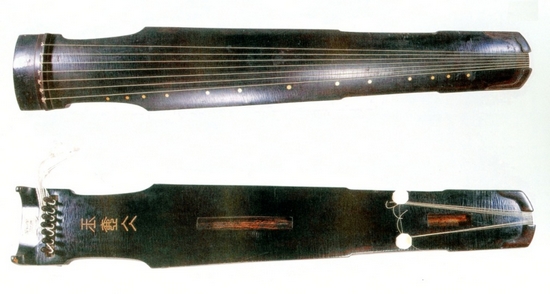
The seven-stringed guqin with the inscription of “Wanhesong” was made of tung wood into a Zhongni style in the Song Dynasty. It measures 128.5 centimeters in overall length and 115.3 centimeters long in yinjian part. It is 20.2 centimeters wide at the shoulder part, 14.5 centimeters wide at the tail and 6.2 centimeters thick. The ancient-looking guqin is soft in texture and yellow in color, with gold hui marks and jade feet and pegs. (Fig.14)
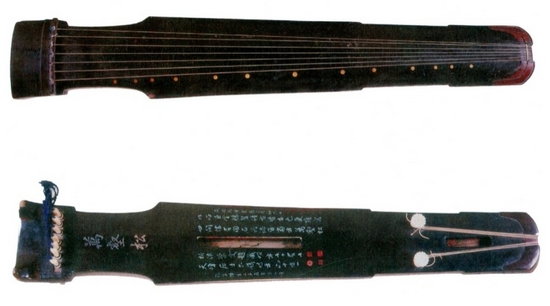
The seven-stringed guqin with the inscription of “Haiyue Qinghui” was made of tung wood into a Zhongni style in the Song Dynasty. It measures 117.5 centimeters in overall length and 108.5 centimeters long in yinjian part. It is 18 centimeters wide at the shoulder part, 12.5 centimeters wide at the tail and 4.9 centimeters thick. (Fig.15)
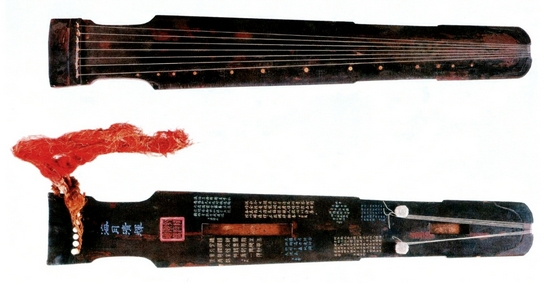
Prince Lu’s seven-stringed guqin with the inscription of “Zhonghe” was made into a Zhongni style in the late Ming Dynasty, under the supervision of Zhu Changfang, the Prince of Lu, in 1634 (the Jiaxu Year under the reign of Emperor Chongzhen). It measures 120.7 centimeters in overall length, with the waist carved between the 8th and the 10th hui marks. (Fig.16)
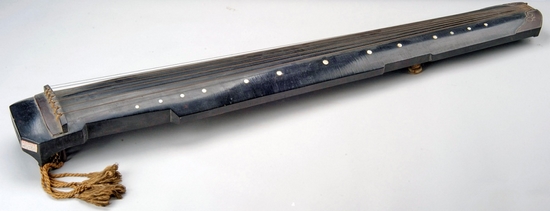
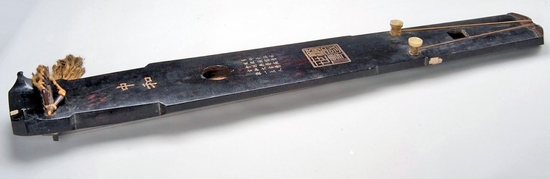
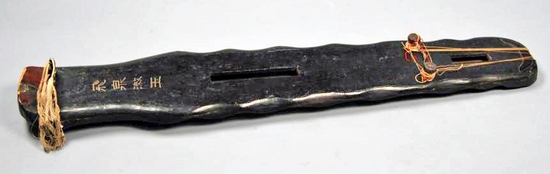
The banana leaf-shaped seven-stringed guqin with the inscription of “Feiquan Shuyu” was made of wood in the Ming Dynasty. It measures 123 centimeters in overall length, 20 centimeters in width and 11 centimeters in height. The surface is inlaid with 13 mother-of-pearl hui marks and the bottom is inscribed with the four characters of “Feiquan Shuyu”. (Fig.17)
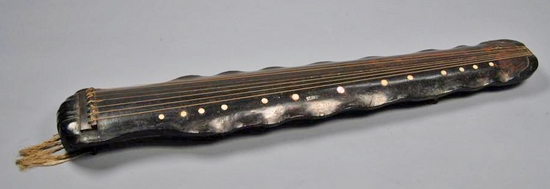
The seven-stringed guqin was made of wood into a Zhongni style in Emperor Jiajing’s reign of the Ming Dynasty. The 118-centimeter-long piece is coated with black lacquer. (Fig.19)
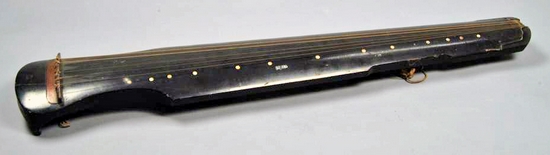
Confucian thoughts got revived in the Northern Song and Southern Song dynasties and guqin instruments were largely made into a Zhongni style accordingly. Those made in the early Northern Song Dynasty basically followed the Tang-style design, while the evidently-curved surface got flatter and wider. The design of guqin experienced a radical change in shape during the Southern Song Dynasty. It looked slimmer and more graceful, thus was of a stronger sense of conservativeness and romanticism.
Guqin was the earliest plucked instrument in China and boasted a history of around 3,000 years. Confucius, Sima Xiangru, Cai Yong and Ji Kang were all known for their excellent skills in playing guqin. Ancient Chinese scholars integrated the Confucian thoughts into the understanding and study of guqin music, so that this musical instrument has for thousands of years been thought as a symbol of lofty aspirations and Confucian rites, and played a role in the society accordingly.
Over 150 pieces of guqin music have survived today. The Song Dynasty saw the scientific and technological development by leaps and bounds in Chinese history. Printing emerged during the period and boosted the development of guqin music in China. As printing technology got further advanced in the Ming and Qing dynasties, quite a number of guqin music scores were published and spread. More than 140 types of guqin music scores were found in written documents, according to which, over 300 pieces were created in the Ming Dynasty alone. Guqin played an important role in passing down and carrying forward the time-honored Chinese music.
The scholars of the Song Dynasty cultivated their mind by playing guqin. Following the old ways of the Tang Dynasty, scholars of the Song Dynasty inherited traditions and developed new playing techniques and music scores of guqin. They also well enjoyed the essence of the art of the ancient musical instrument and incorporated it into their daily life, mental cultivation and education. Scholars went into the officialdom in large numbers and formed the foundation of society of the Song Dynasty. All the educated men, from the emperor to scholar-officials in the court, were proud of skills of playing guqin. Zhao Ji’s Listening to a Zither (Fig.9) in the collection of the Palace Museum vividly depicts a guqin player and his audience.
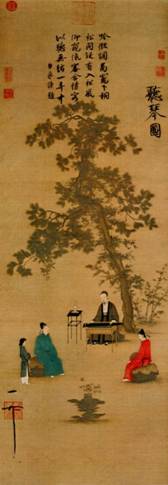
Fig.9 Listening to a Zither by Zhao Ji, Song Dynasty
Zhu Wenji was an upright and ingenious court guqin player active during the Taiping Xingguo era (976-983) of the Northern Song Dynasty. The school of guqin-playing monks established by Zhu Wenji dominated the arena of guqin music of the Northern Song Dynasty for as long as one century and a half. Zhu Changwen (1041-1100) in the Yuanfeng era of the Northern Song Dynasty accomplished History of Guqin in 1084. The first written history of guqin in China, the book was published in 1233 (the sixth year of the Shaoding era of the Southern Song Dynasty) by Zhu Dazheng, a grandnephew of Zhu Changwen’s. Su Shi, one of the Eight Great Prose Masters of the Tang and Song Dynasties, was also good at playing guqin and often wrote poems on guqin. Guo Chuwang (before 1190-after 1260), a renowned guqin musician of the Southern Song Dynasty, was alternatively known as Guo Mian and born in Yongjia, Zhejiang Province. He authored many famous pieces, including Xiaoxiang Shuiyun (Waters and Clouds of the Xiao and Xiang Rivers), Fancanglang (Boating in the Dark Green Waves), Qiuhong (Swan Geese), Buyue (A Walk in the Moonlight) and Qiuyu (Autumn Rain). During the Northern Song and Southern Song dynasties, guqin musicians developed many different schools of playing techniques in Bianliang (present-day Kaifeng), Zhejiang, Jiangsu and Jiangxi. They formed various styles and greatly developed the art of guqin.
The Song Dynasty was a transitional period in Chinese history of guqin art. This musical instrument was a carrier of the traditional Chinese music and culture. With those beautiful classical music works, people have enjoyed an aesthetic attitude originating from their daily life, but going beyond the reality. Guqin crystallizes the beauty and harmony of humans.
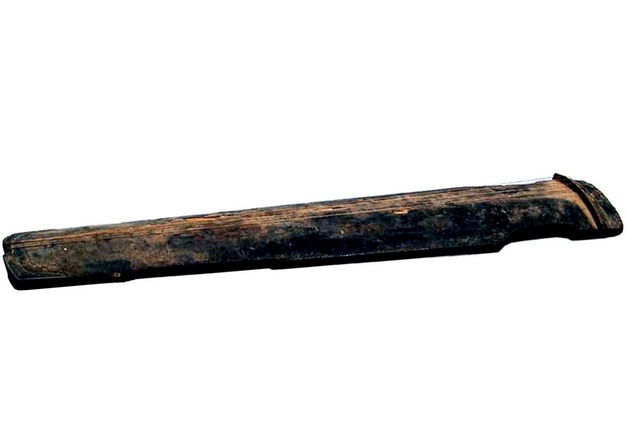
The Zhongni(Confucius)-style wood seven-stringed guqin with the inscription of “Shiquan” of the Southern Song Dynasty measures 121.00 centimeters in overall length, 19.20 centimeters in width and 4 centimeters in thickness. It is now in the collection of Henan Museum.