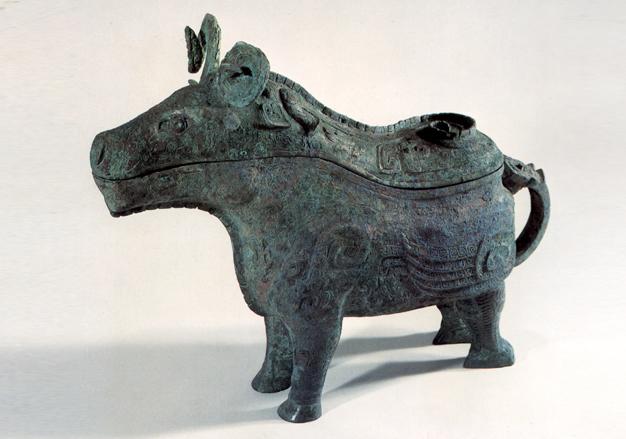
Why are Shang and Zhou bronzes typically adorned with the designs of multiple animals?
Your answer please, if you have any questions or answer, please feel free to send us email, we are waiting for your answers and participation, and your comments, answers and suggestions will be highly appreciated. We will select and publicize the most appropriate answers and comments some time in the future.
Weekly Selection Email: meizhouyipin@chnmus.net
Lady Hao’s Tomb in the Yin Ruins
In 1976, archaeologists discovered a well-preserved high-class tomb of the late Shang Dynasty under a rammed earth foundation site in the Yin Ruins at Xibeidi, Xiaotun, Anyang City, Henan Province. It was the first nobleperson's tomb that had not been broken by tomb robbers since the excavation of the Yin Ruins. Lady Hao was one of the wives of Wuding, King of Shang. As recorded by the oracle inscriptions on tortoise shells in the Yin Ruins, Lady Hao once led an expeditionary troop of 3,000. Therefore, she has been acclaimed as the earliest female general ever known in China. Lady Hao’s Tomb, 5.6 m long, 4 m wide and about 8 m deep, covers an area of over 20 sq m. A total of 1,928 burial objects were unearthed, including bronzes, jades, stone implements, ivory ware, bone ware and clam tools.
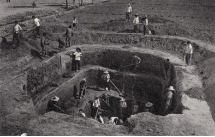
Fig. 12 Excavation of Lady Hao’s Tomb
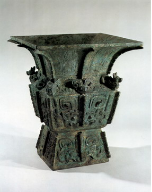
Fig. 13 “Lady Hao” Square Zun
According to published archaeological materials, there are 4-50 bronze gong with definite unearthing place and over 70 that have been passed down. Bronze gong are far less than other types of bronze wine vessels. Relatively speaking, they had been in existence for a short time. The excavation of Lady Hao’s Tomb led to the discovery of the most bronze gong in one single operation. Altogether eight bronze gong were discovered—a pair of four-footed gong and three pairs of circular-footed gong, all in pairs.
A bronze gong was unearthed from the Shang tomb at Guojiazhuang of the Yin Ruins in Anyang. The vessel was made in the late Shang Dynasty, with an edge perimeter of 18.7 cm, a circular foot of 9x6.8 cm, a total height of 19.2 cm and a weight of 1.05 kg.
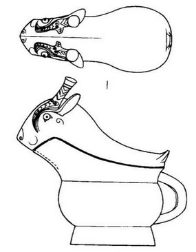
Fig.6 Bronze Gong unearthed from from the Shang tomb at Guojiazhuang of the Yin Ruins in Anyang
In November 1977, an ox-shaped bronze gong of the late Shang Dynasty was unearthed at Baojiashan, Hengyang, Hunan. It is 74 cm tall, 8 cm wide and19 cm long, with the wall 2 cm thick.
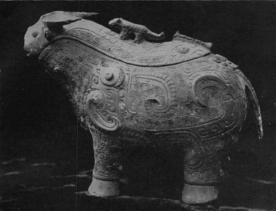
Fig.7 Ox-shaped bronze gong unearthed at Baojiashan, Hengyang City, Hunan
It is generally believed that beast-shaped gong were wine vessels prevalent from the mid Shang Dynasty to the early Western Zhou Dynasty. They went into disuse in the mid Western Zhou Dynasty. Compared with other vessels, unearthed gong are very few in number. Of the tens of thousands of bronzes unearthed in Baoji, Shaanxi, there are only two gong. The Gao Tian Gong of the late Shang Dynasty unearthed at Daijiawan, Baoji, Shaanxi consists of two parts, i.e. the lid and body. The lid bears a two-character inscription, which says, Gao Tian.
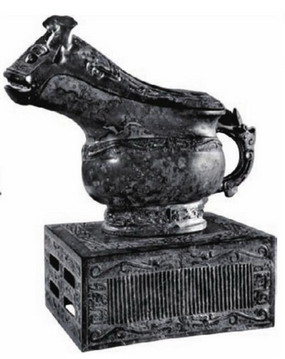
Fig.8 Gao Tian Gong unearthed at Daijiawan, Baoji, Shaanxi
In 1997, three bronze gong were unearthed from the Chang Zi Kou Tomb in Taiqinggong Town, Luyi County, Henan Province. Of them there are one gui-shaped gong and two square gong. The two square gong are similar in design, size and pattern, and they should be a pair.
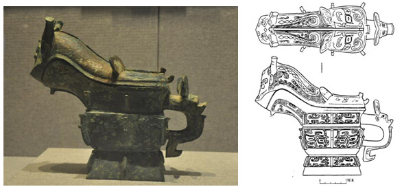
Fig.9 Square gong unearthed from the Chang Zi Kou Tomb in Taiqinggong Town, Luyi County, Henan Province
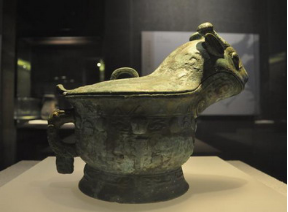
Fig.10 Chang Zi Kou Gui-shaped Gong
In 1976, the Zhe Gong was unearthed in Zhuangbai Pit No. 1 at Fufeng, Shaanxi. Made in the early Western Zhou Dynasty, it is 28.4 cm tall, 38 cm deep and 12.5 cm deep; its mouth is 11.8 cm wide. The vessel and lid bear a 40-character inscription.
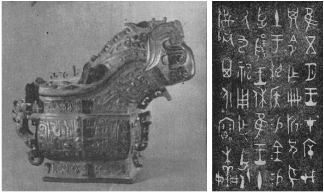
Fig.11 Zhe Gong unearthed in Zhuangbai Pit No. 1 at Fufeng, Shaanxi and its inscription
The above comparison on bronze gongs in design, pattern and ethnic origin indicates that bronze gong have basically been unearthed from middle- and large-sized tombs. Their former users were mostly Shang people or noblepersons and principality leaders in close relations with the Shang Dynasty. The areas where they were prevalent concentrated in Henan, the capital and its suburbs in Shaanxi, and the neighbouring principalities. Judging by excavation findings, gong do not show set combinations. In the mid and late Western Zhou Dynasty, the function of bronze gong changed. Bronze gong in the mid Western Zhou Dynasty, particularly square gong, feature rougher lines. Their form had evolved. On some of them, the handle disappeared. As for circular-footed gong, they are decorated with only one “string” pattern at the belly. The handle is simplified too. There are no complex beast faces in relief. In terms of decoration, bronze gong mostly adopt the technique of san-ceng-hua or “three-layer relief". Animal patterns are particularly common. Patterns on bronze gong shed light on people’s aesthetic taste and religious belief in that period.
The bronze gong is a special bronze ritual vessel, whose form is unique. It had no pottery origin. The earliest bronze gong was found in Lady Hao’s Tomb discovered during the second-phase excavation of the Yin Ruins in Anyang, Henan.
Bronze gong can be classified into beast-shaped gong and horn-shaped gong by form. A beast-shaped gong is usually a relatively realistic representation of a certain animal. It features either a circular foot or four feet. With a spout, a handle and a lid shaped like a horned beast, it was prevalent from the late Shang Dynasty to the mid Western Zhou Dynasty. By their foot design, beast-shaped gong can be further divided into three- or four-footed gong and circular-footed gong. Circular-footed gong were large in number. They were made throughout the entire history of bronze gong. During the four-phase excavation of the Yin Ruins, bronze gong were unearthed in the largest number and in the most complete array. The wide adoption of the square-body design, the fei-leng ridge and the “three-layer” relief (san-ceng-hua) made bronze gong statelier and more awe-inspiring. The period was the heyday of bronze gong. In the early Western Zhou Dynasty, though the Shang Dynasty had been terminated, Shang culture still influenced the evolution of bronze ritual objects. In the mid Western Zhou Dynasty, bronze gong decreased in number and gradually declined.
The horn-shaped gong is shaped like an ox or rhino horn, typically without complex patterns. In 1934, a kui dragon horned-shaped vessel (Fig. 4) was unearthed from the area of the Yin King’s mausoleums at Xibeigang of the Yin Ruins in Anyang. It has an overall height of 28.1 cm, a weight of 910 g and a volume of 650 ml. Horn-shaped gong usually do not have a foot or a mount on which it can be placed. It was probably used as a wine vessel back then.
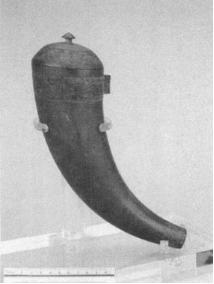
Fig. 4 Horn-shaped vessel decorated with kui dragon patterns, unearthed from the area of the Yin King’s mausoleums at Xibeigang of the Yin Ruins in Anyang
The study of the inscriptions on the gong has revealed that bronze gong were ritual vessels used by Shang people or Shang descendents. And the tomb owner enjoyed relatively high social status, mostly as the leader of a principality or high-class nobleperson with military leadership.
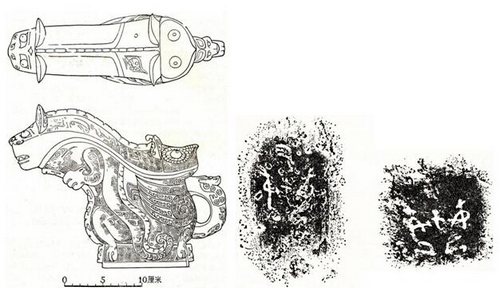
In 1976, a well-preserved late Shang noblewoman’s tomb—Lady Hao’s Tomb—was discovered in the Yin Ruins at Xibeidi, Xiaotun, Anyang. The Si Mu Xin Four-Footed Gong housed by Henan Museum was unearthed from this tomb. The vessel is unique in form. In standing posture, it features a wide spout with a hole in the front end, and a fei-leng ridge beneath the spout, which runs directly to the chest. The body is flat and long, narrower in the front and wider in the back, with the middle part slightly protruding. It has four feet. The front legs have odd-toed feet. Slightly longer than the back ones, they are each decorated on the outside with the design of a kui dragon, which faces downward. The patterns on the inside are not so clear. The two back feet resemble bird feet, which are decorated with the patterns of feathers. Each of them has four toes. Beneath them are concave sprues. The handle is adorned with a beast head. Below the spout, there are kui dragon designs on the two sides, but they are not very clear. On each of the two sides of the chest, there is a down-facing kui dragon. On each of the two sides of the front part of the belly (above the front feet), there is a kui dragon too, with the head down and the tail up and curled inward. At the rear end of the belly there are a pair of wings folded together and a drooping short tail, which seems to integrate with the hind legs. The inner side of the handle is adorned with incised beast faces. On the middle part of the bottom of the belly there is an inscription which says Si Mu Xin. On one side of the belly there are traces of silk fabric.
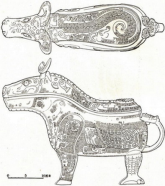
Fig. 1 Vertical and side views of the Si Mu Xin Four-Footed Gong
The front of the lid is like a horse head, but with two large curved horns. On the surface of the lid, there is a dragon with a big head, round eyes and two horns tilting close to the body. The dragon has a long body and a long tail, with a spine in the shape of a fei-leng ridge. To the right of the dragon body there is a kui (monster in Chinese mythology), which faces the spout. Its body and tail are particularly long; and its two legs, which have four claws, bend forward—such a design is rather special. To its right there are patterns of a monster and another kui. There is a funnel along the edge of the lid, which fits with the edge of the vessel. In the back of the lid, there is a three-character inscription, which writes, Si Mu Xin.
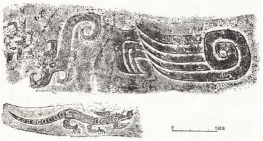
Fig. 2 Patterns (part) on the Si Mu Xin Four-Footed Gong
Above: Left side of the belly
Below: Right side of the lid surface
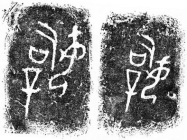
Fig.3 Inscriptions on the body and lid of the Si Mu Xin Four-Footed Gong